


We are happy to advise you!

Certified Conservator (Univ.) & Cabinetmaker
Philipp H. Westebbe
Phone 0151 – 1976 0000 | Mail mail@zrw-berlin.de
Conservation Workshop | artLABOR ®
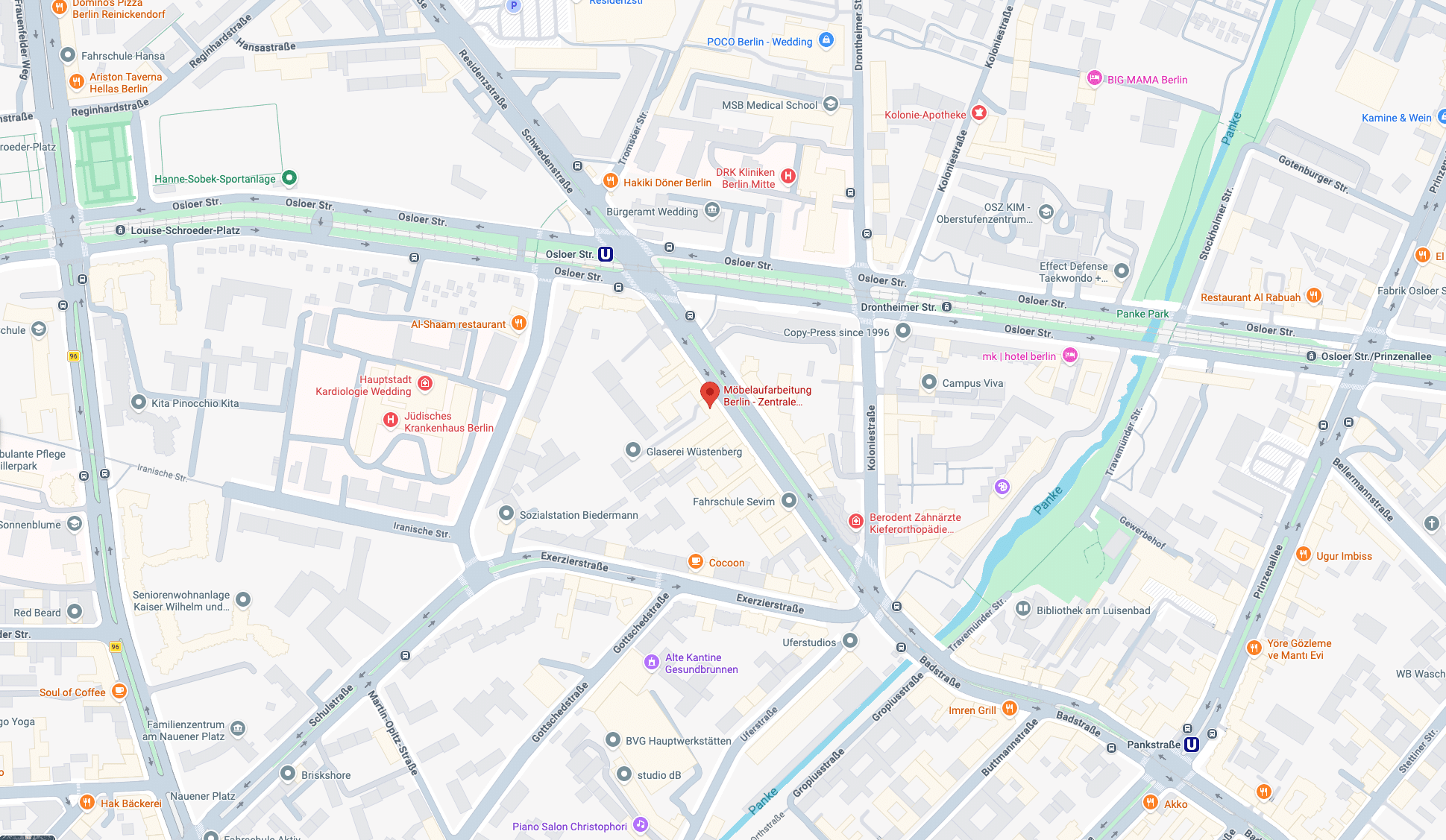
Schwedenstr. 14, 13357 Berlin | Wedding
Opening hours: Mon. to Fri. 08:00 – 16:00
(Appointments by arrangement!)
4 Steps to Successful Conservation
Contact us now!
Simply arrange a viewing appointment with us and you will receive a detailed fixed-price quotation within two days for, e.g., furniture conservation Berlin or wood conservation Berlin!
Frequently Asked Questions
Depending on the measure, drying time is required, parts may need to be newly produced, some of which are handcrafted, etc. One can only guarantee for oneself, but not for partners and suppliers.
With every restoration, “surprises” may become visible that were not recognizable beforehand. However, I always maintain contact with my clients and regularly inform them of the current status of commission processing.
The commission for restoration is divided into preventive and practical restoration.
Preventive Conservation:
Preventive restoration refers to the transport, storage, and also exhibition of an object under optimal conditions.
Practical Restoration:
Practical restoration includes the maintenance or complete or partial reconstruction of a cultural asset to protect it from further deterioration.
The fields of activity of the restorer initially include the creation of a tailored restoration concept on which subsequent conservation and restoration work is based. Particular challenges of restoration lie in the use of suitable materials and methodologies to carry them out in the restoration project. Since restoration often includes the conservation or reconstruction of historic material, particular importance is attached to the use of original materials and their processing. Predominantly used materials are wood, color substances from various oils (e.g., linseed oil), resins, and waxes. Analysis of the original production of the object is almost indispensable in the context of restoration.
Consequently, high-quality restoration of a cultural asset requires comprehensive knowledge by the contractor of historical and modern processing methods. A clear and detailed description of the restoration to be performed on the object facilitates cooperation between client and contractor, as the restorer can clearly identify his suitability for the service to be performed based on this.
The Commission:
After I have determined the restoration needs, created a restoration or conservation concept, and determined the material requirements, I can inform you of an estimated commission value. If you wish to commission me, we conclude a contract with each other, and the commission is considered awarded.
Most historical pieces of furniture are truly unique, even if they are not necessarily unique in terms of historical evaluation. Furniture produced by craftsmen from the time of industrialization onwards, i.e., from the Wilhelminian era (Gründerzeit), are generally no longer rarities, as they were already produced in large quantities. If only very rare individual pieces of such furniture remain on the market, these can also be considered a rarity.
If the furniture in question is a rarity, special measures must be taken. This usually leads to a higher time requirement, which in turn leads to higher costs. Normally, the hourly rate is up to 50% higher than for a standard restoration. Should I calculate a restoration based on the rarity factor, this will be discussed in advance. Especially with rarities, there is often a higher material cost, as custom-made parts become necessary or partners must be consulted.
For more complex measures, however, transport to my ZRW Berlin is essential.