

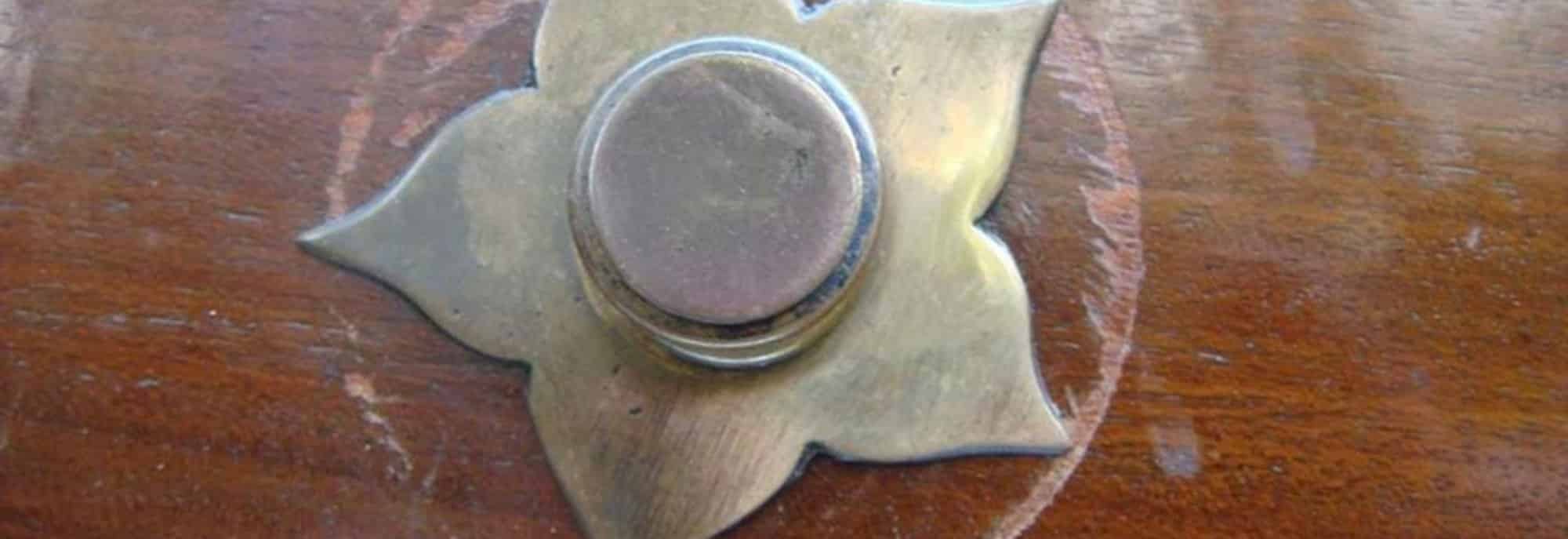
Damage Analysis as the Basis for a Well-Founded Restoration Plan
Damage analysis is an integral part of a restoration assessment. A thorough examination of the findings, in turn, is essential for developing a well-founded conservation and restoration plan for your furniture, artwork, or wooden object. To identify previous repairs, touch-ups, and restoration work on furniture and wooden objects—and to determine which materials were used—we employ, among other methods, non-destructive spectroscopic analyses.

Material identification and damage analysis form the basis of a restoration assessment
When conducting condition assessments and examinations, we—the wood and furniture conservators at the Central Restoration Workshop in Berlin—can rely on our expertise and decades of practical experience in the restoration and conservation of wooden objects and furniture from all stylistic periods. However, there are always situations in which our human senses reach their limits. Even in these cases, there is a solution for obtaining the necessary data to develop a conservation plan or restoration strategy that does justice to the object in question.
Various spectroscopic methods are suitable as non-destructive—or at least minimally destructive—scientific analytical methods.
The strength of spectroscopic analysis lies in the field of materials analysis. The reliable identification of the materials used is of crucial importance for the evaluation of findings—particularly in damage analysis—and, consequently, for the subsequent development of a customized restoration plan or conservation strategy.
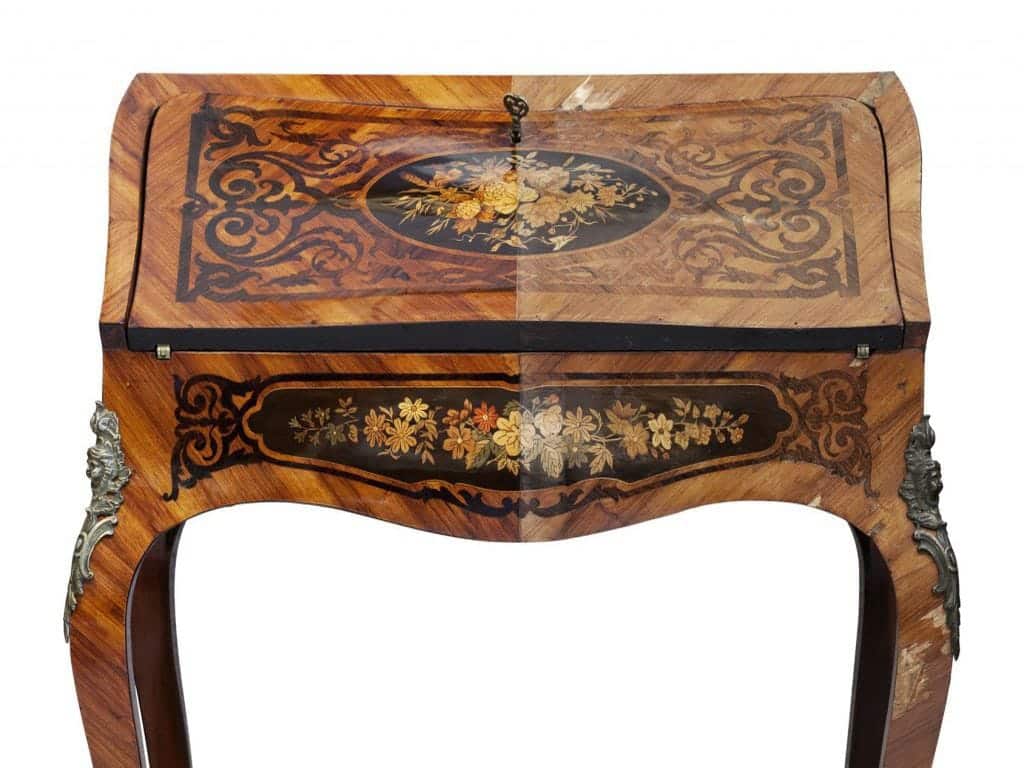
Therefore, material identification and damage analysis are essential
We do not know the history of aging, repair, and restoration for most objects. Whether it’s furniture, wall paneling, or a wooden work of art, it is not always immediately apparent from looking at an object when it may have sustained damage that has already been repaired. As a rule, therefore, we also do not know which materials were used to fill in gaps, close cracks, and seal surfaces.
In keeping with our restoration philosophy However, our top priority is to preserve the historical integrity of a piece of furniture or wooden object. The more meticulously and thoroughly we conduct our damage analysis —and the more precisely we can determine which materials were attached or applied to the object, where, and for what purpose— the easier it will be for us later, for example,
- the development of an appropriate restoration and conservation plan,
- the selection of suitable materials,
- the use of appropriate conservation and restoration techniques,
- the development of appropriate maintenance guidelines and the identification of preventive measures to ensure the best possible protection of the property in the future.
Material analysis, therefore, is key to reconstructing an object’s history of repairs and damage as part of the restoration assessment.
What spectroscopic analyses can be performed at the ZRW Berlin?
Generally speaking, as the Central Restoration Workshop in Berlin, we have access to various spectroscopic laboratory methods through our partners. These methods are suitable for different areas of application and for addressing various issues.
Non-destructive material analysis methods using:
- UV/Vis/NIR Spectroscopy
- FT-IR spectroscopy
Here you can learn more about two spectroscopic methods we frequently use: UV/Vis/NIR spectroscopy and FT-IR spectroscopy (Fourier-transform infrared spectroscopy):
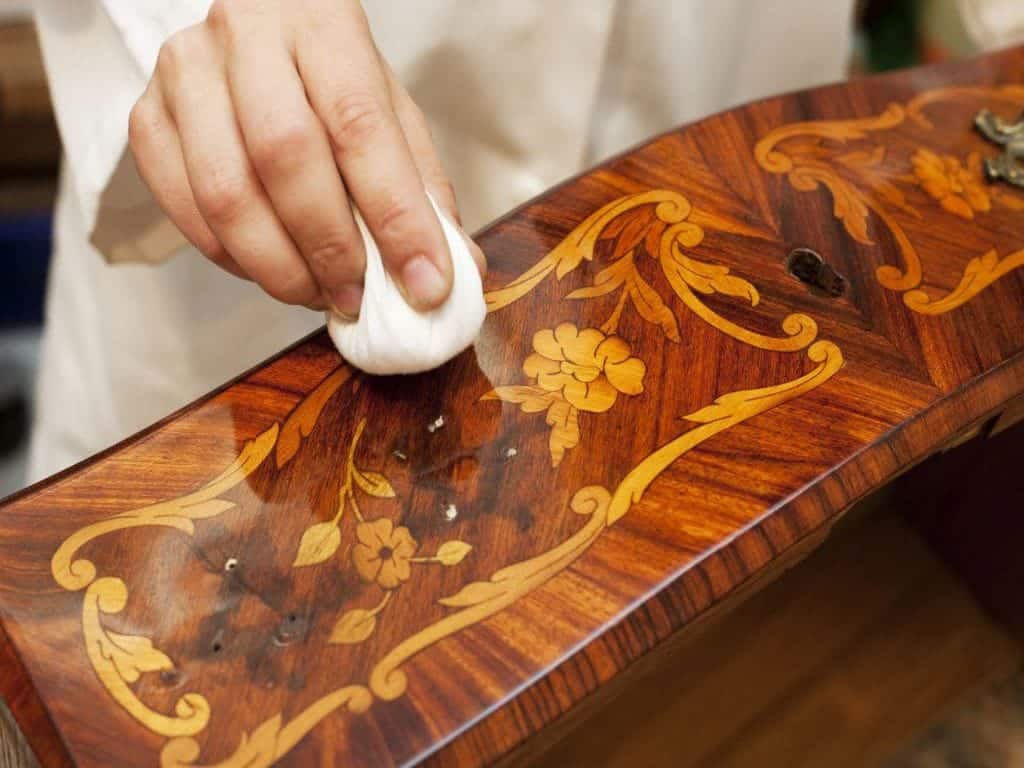
Analysis of Findings and Material Identification by the ZRW Berlin
After we have inspected your furniture, interior, or wooden object in need of restoration at your location, we will be happy to advise you on whether further scientific testing for damage analysis and material identification is necessary, advisable, and appropriate.
Simply send us an inquiry via our contact form and attach a few general and detailed photos of your item so that our team of wood and furniture restorers at the Central Restoration Workshop in Berlin —led by certified restorer (Univ.) and carpenter Philipp Westebbe —can get a first impression. We’ll get back to you as soon as possible to schedule an appointment for an on-site assessment of the item at your location in Berlin or Brandenburg — with no obligation and at no cost!