


Practical Restorations
The ZRW—restorers at our Central Restoration Workshop in Berlin:
- Owner & CEO Philipp H. Westebbe [Carpenter & Certified Restorer (Univ.)]
- Jens Venske’s Van (Vehicle specs: VW LT II, color: silver. Cargo area: 4.40 x 1.60 x 1.90 m with a loading height of 1.75 m [due to the doors]; 3.5 metric tons gross vehicle weight, which means approx. 1.2 metric tons payload. 158 PS, manufactured in July 2006)

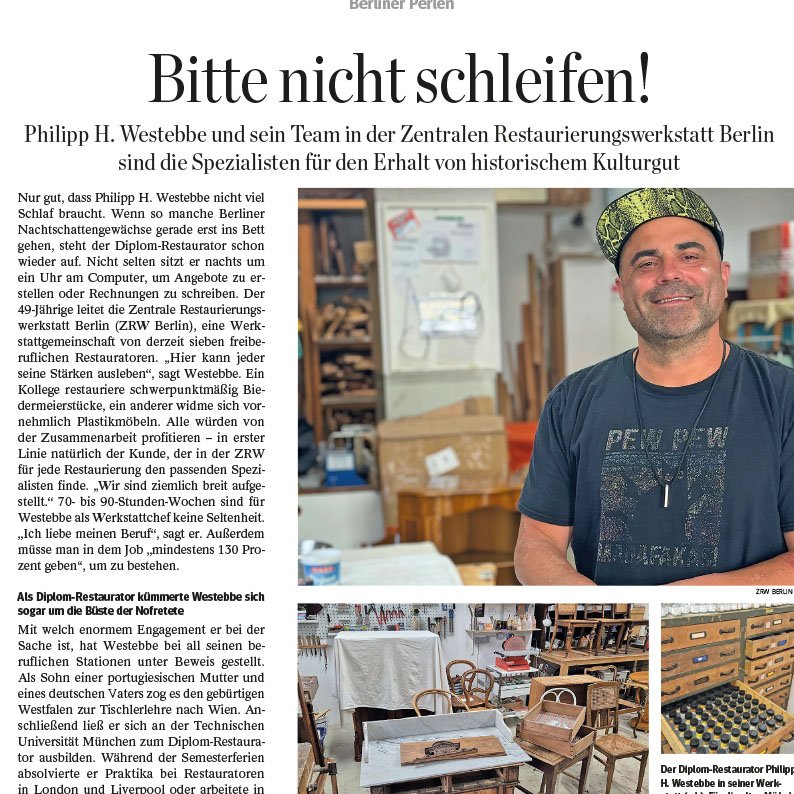
A Look Behind the Scenes
Philipp H. Westebbe, Certified Conservator And his team doesn’t create replacements—they preserve the originals. Furniture, plastic, icons—everything is expertly restored here. It’s loud, it’s quiet, it’s 70–90 hours a week. With a passion for every detail: that’s the Central Restoration Workshop in Berlin.
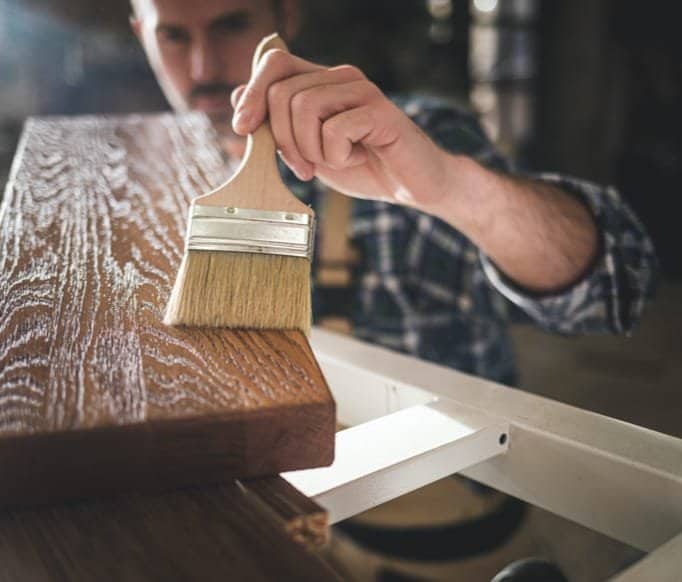
behind our ZRW Berlin
Sustainability in furniture restoration is an important topic that encompasses various perspectives, ranging from preservation and values to restoration philosophy and ethics. Non-destructive examination methods and instrumental analysis make it possible to work in a way that conserves resources and transcends generations. Restorers are called upon by the “Code of Ethics” to act in an environmentally conscious and ecologically responsible manner, for example, by using recyclable and reusable materials. Durability and preventive conservation are at the heart of the work to preserve and maintain cultural heritage.
Sustainability Through Restoration
In architecture, sustainability is becoming increasingly important, especially when it comes to historic buildings. The goal here is to minimize the use of new building materials and to reuse old ones. In furniture restoration as well, the use of traditional materials and manufacturing processes is a priority in order to preserve cultural heritage.
Sustainability in furniture restoration involves concepts for analysis and condition assessment, as well as the use of non-destructive and minimally destructive examination methods. A sustainable approach considers the entire life cycle of a piece of furniture, from manufacturing to disposal.
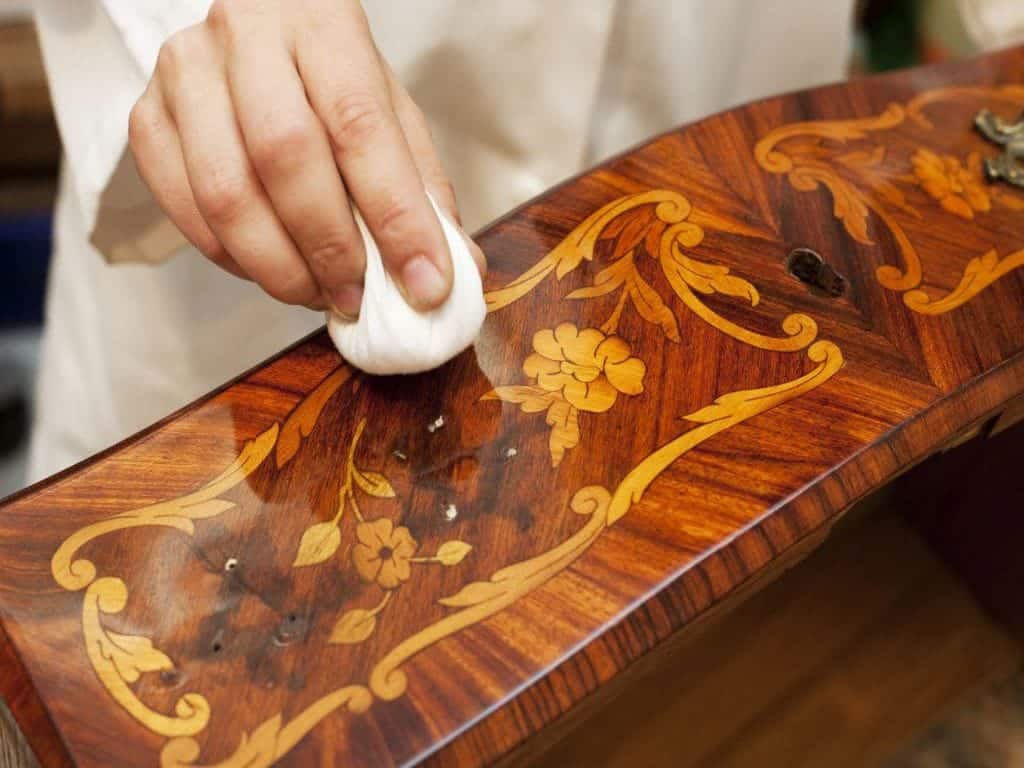
Preventive conservation
The restored pieces of furniture should blend seamlessly into their surroundings, whether in a private or public setting. Individuality and the preservation of cultural heritage are of great importance here.
Sustainable furniture restoration is one way to actively contribute to climate protection and the preservation of cultural heritage. Everyone can do their part by choosing to restore rather than throw away and by using alternative, eco-friendly products.

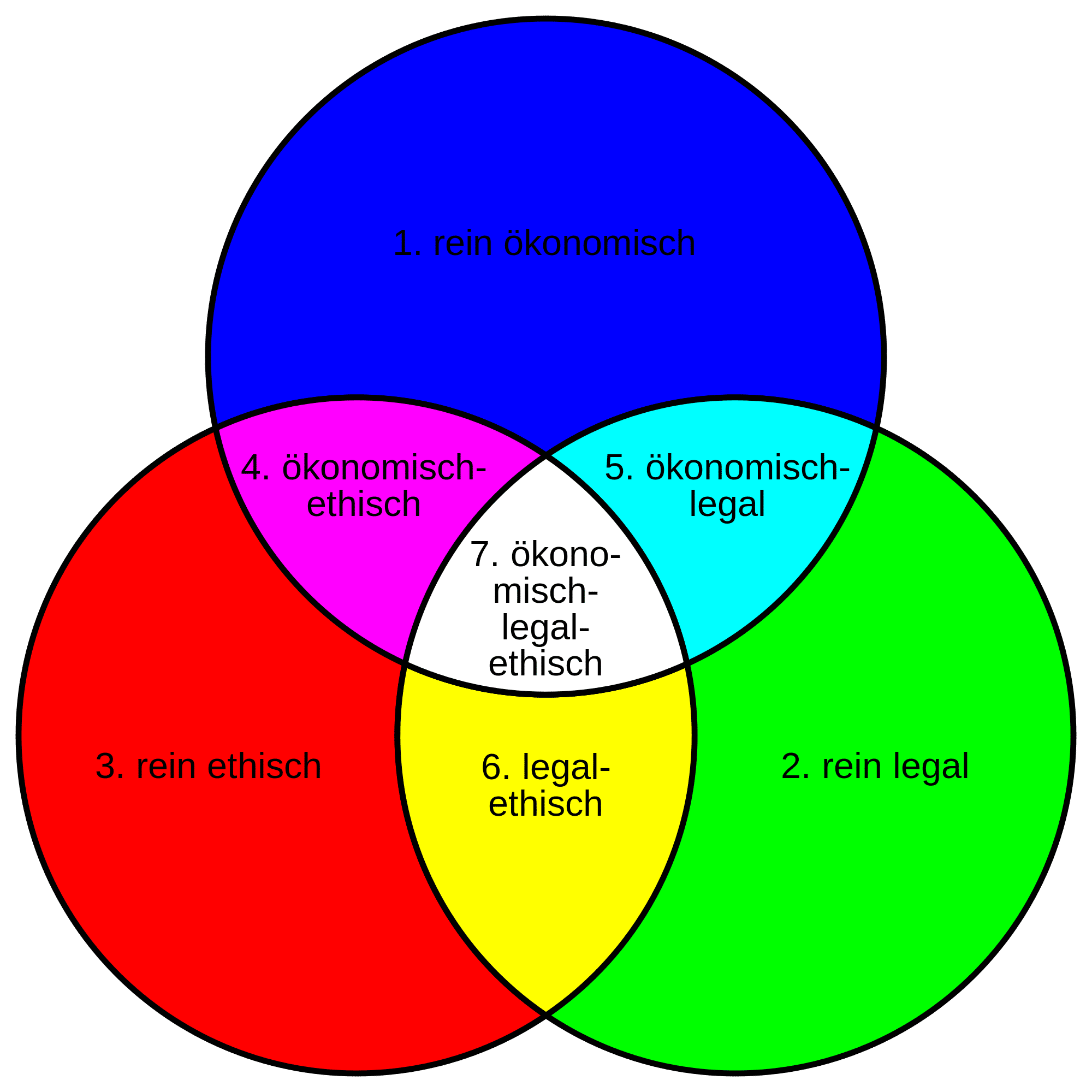
Recognizing and Valuing Values
A restorer works with works of art. Every object that you entrust to us—the wood and furniture restorers at the Central Restoration Workshop in Berlin—whether it’s an antique chest of drawers, a picture frame, or an entire set of intricately crafted choir stalls—represents a rich tapestry of irreplaceable cultural, ethical, religious, artistic, social, technical, scientific, and economic values.
In addition to their cultural and historical value, furniture, wooden objects, and works of art from bygone eras often hold sentimental value—it is not uncommon for them to have served as the foundation for an entire library of personal memories, passed down through generations and continually enriched over the years with fascinating stories and experiences from subsequent generations. Moreover, the diverse signs of wear and use give every piece of furniture, every interior, and every work of art a special individuality—a unique identity that is worth preserving.
The ZRW Berlin's Understanding of the Profession
For us, wood and furniture restoration is not just a profession—it is a deep passion for preserving our cultural heritage that drives us every day and fuels our enthusiasm for our work. We are fully aware of the responsibility we must reaffirm every day and live up to in every moment of our work: We work with and on historical cultural artifacts, and it is up to us to ensure they are preserved for future generations.
Every action we take—no matter how well-intentioned it may be in seeking to preserve and protect an object—inevitably alters the historically evolved condition of the object in need of restoration. Every modification is thus a destruction of historical facts that cannot be readily reconstructed in this form.
As conservators, we have internalized the principle that we are intervening in the irreplaceable historical integrity of a work of art when we develop and implement a scientifically based plan for its conservation and restoration.
Why is an ethics of restoration indispensable?
For example, when we restore the shellac finish on a dresser and thereby make a deep scratch invisible to the viewer’s eye, we also erase the memory of a specific event. We erase the context that led to the scratch’s formation—a context that is an integral part of this piece of furniture’s history of aging. This realization gives rise to a host of questions and issues that call for a binding code of professional ethics for conservators—that is, guidelines for the ethically responsible handling of cultural heritage.
Such ethical guidelines play a crucial role in the protection of cultural heritage and, therefore, in historic preservation and restoration. Without a binding code of professional ethics, the practice of our profession would be unthinkable, and the objectives and results of restorers’ work would be completely incomparable worldwide. Our work could never even come close to meeting our standards.

The Venice Charter as the Foundation of International Restoration Ethics
We, the wood and furniture conservators at ZRW Berlin, base all our conservation and restoration work on the Venice Charter, which was adopted in 1964 and is still regarded as the globally recognized Magna Carta of historic preservation. The values and procedures for the conservation and restoration of cultural heritage sites set forth in the Venice Charter guide our restoration ethics as the Central Restoration Workshop Berlin and, of course, those of the entire VDR (Association of Restorers e.V.), of which our owner, Philipp Westebbe, a university-certified restorer and carpenter.
The objectives of conservation are clearly articulated in the Venice Charter: they are “the preservation of a work of art and the safeguarding of historical evidence.” Restoration, on the other hand, is defined as a “measure that should remain exceptional. Its goal is to preserve and reveal the aesthetic and historical values of the monument. It is based on respect for the existing structure and on authentic documentation.” Restoration always includes “preparatory and accompanying archaeological, art-historical, and historical investigations” as well as meticulous documentation “in the form of analytical and critical reports, drawings, and photographs.”
Other key aspects of the Venice Charter include:
Repair of functional damage so that the cultural property in question can fulfill the purpose for which it was originally intended
In subsequent foundational texts, the principles set forth in the Venice Charter have since been expanded, elaborated upon, or applied to specific fields of activity. We, the wood and furniture conservators at the Central Conservation Workshop, are committed to these principles and have internalized conservation ethics as the foundation of our professional practice.