

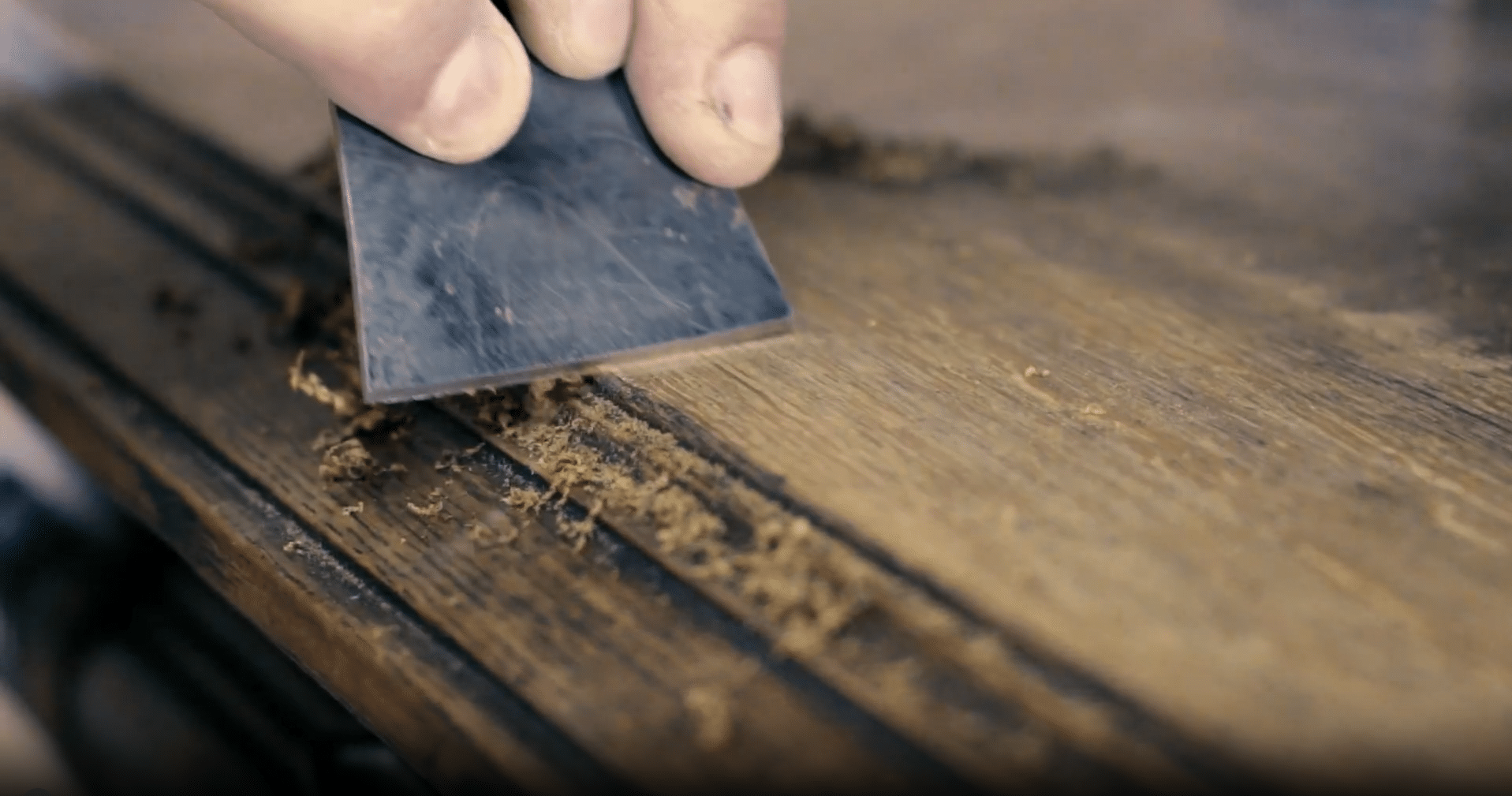
Pronunciation: IPA: [ˈfɜːrnɪtʃər]; Audio examples: furniture (info); Rhymes: -ɜːrnɪtʃər
Meanings: Singular uncommon: large furnishing item
Etymology: borrowed in the 17th century from French meuble → fr,
which derives from Latin mobile → la “movable property”
Translations:
- Arabic (DMG):
- a) Modern Standard Arabic: مُوبِيلِيَا / مُوبِيلْيَا (mōbīliyā / mōbīlyā) → ar f,
- b) قِطْعَةُ أَثَاثٍ / قِطْعَة أَثَاث (qiṭʿatu aṯāṯin / Pausa: qiṭʿat aṯāṯ) → ar f,
- c) mostly collective: أَثَاث (aṯāṯ) → ar m
- Danish: møbel → da n
- English: item → en / piece → en of → en furniture → en, collective: furniture → en
- Esperanto: meblo → eo
- Finnish: huonekalu → fi, kaluste → fi
- French: meuble → fr m
- Greek (Modern) (internal transcription): έπιπλο (épiplo) → el n
- Hebrew (CHA): רָהִיט (rāhī́ṭ) → he m, collective: רִהוּט (rihūṭ) → he m
- Italian: mobile → it m
- Japanese (Hepburn): 家具 (かぐ, kagu) → ja
- Catalan: moble → ca m
- Latin: Medieval Latin: intrinsecum → la n
- Norwegian: møbel →no n
- Polish: mebel→ pl m
- Portuguese: mobília → pt
- Russian (ISO 9): мебель (mebelʹ) → ru f
- Swedish: möbel → sv u
- Slovak: nábytok → sk m
- Spanish: mueble → es m, muebles → es
- Czech: nábytek → cs m
- Turkish: mobilya → tr, möble → tr
- Hungarian: bútor → hu
- Washstand, document carousel, document column, filing cabinet, alcove, ambient furniture, ambient table, work table, armchair, pull-out bed, extending table.
- Bathroom cabinet, badminton cabinet, canopy, bench, Barcelona chair, bar stool, walk-in wardrobe, side table, broom cupboard, visitor’s armchair, visitor’s chair, bed, library table, beer garden set, plant stand, trestle, bonheur du jour, bookshelf, bookcase, sideboard cabinet, office furniture, office chair, butsudan.
- Cabinet, camping chair, chaise longue, club chair, cocktail chair, computer desk, couch.
- Der müde Mann, divan, double bed, double couch, swivel chair, printer table.
- Corner bench, built-in wardrobe, elephant’s foot, English extension, dining nook, dining table.
- Folding chair, façade cabinet, fauteuil, window, television cabinet, television armchair, display cabinet, hinged-door wardrobe, hallway coat rack, Frankfurt cabinet, French bed, cantilever chair, footstool, floor, futon.
- Wardrobe, guest bed, dish draining cabinet, antler furniture, glass table.
- Towel rail, wall cabinet, medicine cabinet, home bar cabinet, valet stand, hi-fi rack, loft bed, tall cabinet, high chair, stool, garden swing, cover.
- Hunting rifle cabinet, Japanese folding screen, jardinière, youth room.
- Kamidana, settee, children’s table, folding bed, folding stool, folding chair, folding chair, wardrobe, club chair, chest of drawers, secretary chest, conference chair, conference table, wicker chair, credenza, kitchen cabinet, kitchen table, refrigerator, curule Anglepoise.
- Landi chair, playpen, armchair, light table, reclining furniture, deck chair, Liegnitz ring table, loveseat, air mattress.
- Marble table, medicine cabinet, music cabinet.
- Bedside table, sewing table, occasional table.
- Wall cabinet, stove bench, fire screen, wing chair, East Frisian sofa, ottoman.
- Rosewood table, cardboard stool, vestment cabinet, folding screen, phono rack, record cabinet, record cabinet for vinyl records, upholstered chair, cot, desk.
- Quilt.
- Smoking table, room divider, récamière, shelf, director’s chair, mobile pedestal, roller shelf, roller shutter cabinet, resting bench, round arch shelf.
- Chess table, sheep rack, rocking chair, stool, sliding door cabinet, umbrella container, umbrella stand, trestle, cabinet, wall bed, wall unit, typewriter table, writing secretary, desk, shrine, shoe rack, shoe cabinet, shoe stand, Swedish chair, sedile, secretary, armchair, sideboard, bench, sitting group, beanbag, sofa, Spanish sideboard, Spanish wall, Spanish zafu, mirror, mirror cabinet, games table, locker, sink, stabelle, grandfather clock, floor lamp, stamp foot, bunk bed, plank cabinet, beach chair, chair, valet stand, System 32.
- Tamaya, tatami, tea table, tea trolley, telescopic shelf, counter, throne, table, stairs, bar, triclinium, chest, tulip lamp, door, bag lamp.
- Ulm stool, base cabinet, USM Haller.
- Vertiko, visiting card table, display cabinet, pantry cabinet, voyeuse.
- Folding screen, linen cupboard, linen chest, Weinhof chair, tool cabinet, changing table, living room table.
- Zabuton, newspaper stand, tent cabinet.
Expectations regarding the results of restoration are high. In many cases, clients expect restorers to give the treated objects a like-new appearance or for a clear “before-and-after effect” to occur. However, that is not the intention of professional restoration. Good restoration remains largely invisible. Restoring does not mean “making new,” contrary to what the Latin term “restaurare” might suggest.
Restoration goes beyond conservation measures. Restoration involves direct intervention on cultural property. In doing so, its aesthetic, historical, and physical properties are respected as far as possible. It may involve making additions or reconstructions that must remain subordinate to the historic object.
For a restorer of furniture and wood, the first prerequisite is the learned trade—cabinetmaker or joiner—as the professional ethical foundation. Subsequently, during academic study, the restorer learns the scientific approach to professional restoration. Quality criteria and guidelines are derived from professional standards and the guidelines of the Association of Restorers.
The criteria of heritage conservation are more narrowly defined than those of privately practicing restorers.
Anyone expecting professional restoration should consult a qualified restorer. Unfortunately, “restorer” is not a protected designation in Germany. Anyone may carry out restoration, even without professional ethics or expertise. In the event of disputes over the outcome of the work, only civil court can provide assistance.
“Furniture restoration” is the correct term when one expects a restorer to conserve and preserve high-quality antique furniture or modern designer furniture. Professional furniture restoration, with the greatest possible preservation of the original material, is carried out by a specialized professional restorer for furniture and wooden objects. Most furniture restorers are trained as cabinetmakers or joiners—specialists in woodworking and processing. This is often followed by academic study to qualify as a Restorer (B.A.) or Restorer (M.A.).
Of course, not only furniture is restored. The field of restoration includes the conservation and complete restoration of historic and modern cultural property.
In fairness, it must also be said that the professional title “Restorer,” with the exception of Mecklenburg-Western Pomerania (Restorer Act MV), is not protected. There are therefore various ways in Germany to work as a restorer, even without expertise. It is therefore always advisable, even though professionally correct restoration is not inexpensive, to entrust valuable historic furniture or precious designer furniture to a qualified restorer (university degree) or restorer (polytechnic degree) (OLD QUALIFICATION) Restorer (B.A.) or Restorer (M.A.) (CURRENT QUALIFICATION). This qualification is obtained at various universities, identifies the Restorer (B.A.) or Restorer (M.A.), and is generally used with the name to emphasize professional competence.
In contrast to today’s professionally correct terminology, most laypeople often speak of “furniture restoration,” which is not educationally correct! The term “restoration” today has nothing to do with the conservation and restoration of high-quality antique objects.
…And Restoration
“Restoration,” in contrast to restoring, is a historical term. In historical scholarship, it means the re-establishment of a former political state or a former form of government. In the years 1815–1830, we had the Age of Restoration. These were the years following the Congress of Vienna. Geographically, the term is limited to the federal states of the German Confederation, which was founded at the Congress of Vienna in 1815.
The era of the Vormärz and the minor French Revolution was characterized politically by the emergence of liberalism and nationalism in a climate of persecution and oppression. The strongest force behind the idea of restoration was the powers of the so-called Holy Alliance, which included Prussia, Russia, and Austria.
A “restauration” still refers, or once again refers, to a restaurant or inn. In gastronomy, too, the Latin term “restaurare” is used for the “restoration of physical strength” or “refreshment.” This is also where the word restaurant derives from. Increasingly, restaurateurs use the word restauration to emphasize the actual purpose of a restaurant visit—refreshment and revitalization—and to invoke tradition.
In France, a restaurateur is understood to be the owner of a restaurant, the innkeeper, or a gastronome. This word is still in common use.
Conservation of furniture, archaeological objects, sculptures, paintings, murals, etc., refers to the preservation of the current condition of the object. The goal of conservation is to halt and prevent the deterioration or permanent damage of a cultural asset. The term encompasses all measures or procedures that examine, document, preserve, or make legible the authenticity of the artworks in question, taking into account their history and age. The artworks must not be irreversibly altered in the process.
Quite simply, a conservation measure would be, for example, the re-gluing and stabilization of a wobbly chair.
In addition to the conservation of furniture, wood & furniture restorers work with wooden objects and installed woodwork. In heritage conservation, among other things, wall paneling, parquet floors, choir stalls, sacristies, windows and doors, etc., are also conserved.
What does preventive conservation mean?
Preventive conservation, in contrast to restoring or reconstructing, is understood as creating an optimal environment without intervention in the material of the furniture or cultural property. This includes measures for the storage of objects, maintaining constant climate values, relative humidity, and ambient temperature. Attention is paid to low pollutant and light emissions and appropriate room hygiene conditions. Through preventive conservation, restorations can be minimized or avoided. Artworks are protected from damage through preventive conservation, and deterioration is prevented.
Restoration cannot be prevented.
Restoration does not mean making something new again. An old condition is restored. In restoration, there are various specialized fields oriented toward the artworks to be restored, or toward the materials used and the techniques applied. “Restoration” defines the promotion of the object through all actions such as perception, appreciation, and understanding. Corresponding measures are only carried out when an artwork has lost parts of its function or meaning.
Fundamentally, the original and its history, as well as reversibility, must be respected. The replacement of decorations and the reassembly of a legless table through additions and/or reconstructions are two examples of restoration.
Conservation vs. Restoration:
In contrast to conservation—preservation—restoration encompasses all strategies by restorers to stabilize the condition of an artwork. It also aims to slow the occurrence of future damage. Among other things, cleaning can be carried out as a conservation measure. Additionally, there are interventions that can encompass both conservation and restoration, such as the application of a varnish coating, the deacidification of paper, or the desalination of ceramics.
The Code of Ethics is internationally valid, setting out the guidelines for restoration and conservation.
– Ernst van de Wetering
“This quote by Ernst van de Wetering also applies to the practice of furniture restoration. ‘Reconstructions’ and the implementation of ideas shaped by contemporary taste have led over long periods to irreversible interventions on furniture. When, finally, in the 1980s, more intensive engagement with historical manufacturing techniques and the associated materials began, and they were professionally researched, the lack of authentically preserved evidence was already very great. Walter Wulf speaks in a similar context of monument disfigurement, which represents the material replaceability of the monument and the manipulability of its meaning and historical message, and warns of the finitude of a monument. The individual intention of furniture, the significance of later alterations, and the resulting effect on the overall appearance of the room—all of this is, in view of the circumstances described, scarcely comprehensible in many cases. Often the search for traces has become entirely futile. Furniture restoration will continue to face this difficult legacy, which is by no means limited to heritage conservation practice, despite all further scientific and technical progress.”
– Miller, Katharina (Die Möbelrestaurierung in der Denkmalpflege, 2015, p. x)
The following questions must be clarified in connection with a reconstruction:
- Degree of impairment to the comprehensibility and experienceability of the object
- Significance of the impairment to the aesthetic effect of the object
- Unambiguous reconstructability of the appearance of the missing area
- Technological prerequisites for the reproducibility of the missing part
- Ethical and aesthetic problems arising from the addition.
For many owners of antique furniture, restoration is an aesthetic question. One wishes to enjoy the beauty of the furniture. Other objects are old picture frames whose gilding has been damaged over the years.
The task of the wood and furniture restorer is to close the missing areas in such a way that the affected area is secured. The material loss should be visually minimized by ensuring that the addition blends in as closely as possible in appearance—i.e., in color and structure. Furthermore, it must be adapted in dimension and in the given craftsmanship surface treatment to the surrounding area. Only through a professionally correctly executed addition can optical integration finally be achieved by means of color or varnish retouching. The demands on the execution quality of an addition are thus very diverse. In some cases, leaving missing areas as they are may also be considered.
The quality of additions places high demands on the professional maturity of the restorer.
Damage to antique furniture:
Just as individual as each historic object are the respective damages. They depend on many factors such as the age of the object, use, environmental influences, or care. There are some “typical basic damages” that are repeatedly observed in antique furniture.
These include:
- Shrinkage cracks—a common reaction to usually excessive room temperatures with dry air
- Breakouts—caused by mechanical impact through use
- Structural damage—loose or opened wood joints
- Wood abrasion—common in unwaxed drawers—wood rubbing on wood
- Detachment of small parts and veneers
- Stains—fading
- Surface damage in general—caused by lack of care or incorrect care
- Wear of functional metal components (locks, hinges, etc.)
- Metal corrosion
- Non-original replacement parts / poorly executed wood additions
To remedy the various types of damage requires appropriate knowledge and craftsmanship know-how. For wood additions, precisely matching wood is essential. Density, structure, and grain must be correct. Stains in wood cannot simply be removed with universal cleaners without knowledge of their origin. Improper removal can have the opposite effect, enlarging stains or making them more prominent. Wood dust created by abrasion (drawers) is frequently misinterpreted by laypeople as bore dust from “woodworm.”
Before the restorer can proceed with damage remediation, he must clarify the many individual case factors.
For more complex measures, however, transport to my ZRW Berlin is essential.
Depending on the measure, drying time is required, parts may need to be newly produced, some of which are handcrafted, etc. One can only guarantee for oneself, but not for partners and suppliers.
With every restoration, “surprises” may become visible that were not recognizable beforehand. However, I always maintain contact with my clients and regularly inform them of the current status of commission processing.
The documentation contains a photographic section and a text section. The before, intermediate, and after condition, the damage, and the restoration measures undertaken are documented.
The obligatory photographs are available to the client free of charge; every invoice lists the exact scope of measures carried out. It may also be necessary for the progress of a restoration to be photographically recorded in detail. This is done with rare furniture because special features often only come to light in the disassembled state.
Upon request, I can also prepare a chargeable brief report on your furniture. This will be recorded in the commission.
I received my first practical training as a wood and furniture restorer during my apprenticeship as a cabinetmaker in Vienna. This was followed by two years of internship in a restoration workshop for furniture and wooden objects in Munich. I then successfully completed my studies as a qualified restorer (university degree) at the Chair for Restoration, Art Technology and Conservation Science at the Technical University of Munich.
During the holidays of my nine-semester degree, I completed several internships abroad, including at the Victoria & Albert Museum in London and at the National Museums Liverpool.
After my studies, I worked as a volunteer at the Deutsches Museum in Munich. I then worked for several years as a freelance restorer in the greater Munich area before moving to the Rathgen Research Laboratory—National Museums in Berlin.
Since March 2012, I have been CEO & Founder of “ZRW – Specialist Workshop for Restoration in Berlin.”
I have decades of experience in the named areas of responsibility as well as the corresponding educational qualifications to restore and treat your object in a scientifically sound manner.
Within the framework of professional affiliations with the Association of Restorers, I feel committed to professional ethical responsibility, including the code of ethics of international restorer disciplines, the Venice Charter. It dates from 1964 and is regarded as the central, internationally recognized guideline in heritage conservation. It establishes central values and procedures for the conservation and restoration of monuments.
The professional profile of the restorer requires predominantly scientific, material-technological, art-historical, as well as artistic training. Manual aptitude is a fundamental prerequisite here.
As active local heritage and monument conservators, we work both in our region and nationally, and we advocate with determination for sensible preservation with professional responsibility toward our cultural heritage.
If there are no concerns regarding functionality, wood additions are also made with naturally aged materials and comparable patina for aesthetic reasons. In furniture restoration and wood restoration, gluing or consolidation is carried out using various time-tested agents such as hide and bone glue, sturgeon glue, parchment glue, cellulose derivatives, etc.
If wood must be replaced, it comes either from the material collection of my ZRW Berlin or from well-known veneer and timber merchants in Europe. If the original furniture was already built with machine-cut knife veneer, then only knife veneer is used.
Natural varnishes are produced in our own workshop for color tone, haptics, and important surface protection.
We view furniture, such as a chest, a table, or a cabinet, first as personally usable objects. They must have utility value for us. On the other hand, furniture are witnesses to cultural history. They show us how the furniture industry has developed.
Not everyone has a special love for objects. Thus, antique furniture is found crammed in attics, as feed cupboards in barns, or at flea markets. Young people love to deface old treasures with paint to be trendy.
Among lovers of antique furniture or modern designer furniture, damage is more likely to attract attention.
Restorative restoration should always be considered when the furniture is no longer what it once was. With still well-preserved furniture, conservation alone can often suffice to prevent deterioration. If the furniture is optically well preserved, it may nevertheless be infested with pests. Poor environmental conditions often contribute to damage. Wood is a biological material, a component of nature. It lives and works.
Ultimately, optical aspects also play a role. Dulled surfaces, scratches, or chipped corners and edges diminish the aesthetics of furniture.
First, the facts from the non-destructive examination are compiled. I evaluate these with my 22 years of experience as a furniture restorer; sometimes it is advisable to consult additional experts for assessment. From the analysis of the current condition, I develop the necessary measures and evaluate the material and labor costs. From this, the approximate cost framework is determined.
As a rule, the previously estimated sums can be maintained. However, before beginning restoration, financial evaluation is difficult because it is not foreseeable whether “surprises” will arise or whether all measures can be implemented as hoped.
If it becomes apparent during the work process that the estimate cannot be maintained, the estimated cost quotation is refined and further procedure is discussed with the client.
The commission for restoration is divided into preventive and practical restoration.
Preventive Conservation:
Preventive restoration refers to the transport, storage, and also exhibition of an object under optimal conditions.
Practical Restoration:
Practical restoration includes the maintenance or complete or partial reconstruction of a cultural asset to protect it from further deterioration.
The fields of activity of the restorer initially include the creation of a tailored restoration concept on which subsequent conservation and restoration work is based. Particular challenges of restoration lie in the use of suitable materials and methodologies to carry them out in the restoration project. Since restoration often includes the conservation or reconstruction of historic material, particular importance is attached to the use of original materials and their processing. Predominantly used materials are wood, color substances from various oils (e.g., linseed oil), resins, and waxes. Analysis of the original production of the object is almost indispensable in the context of restoration.
Consequently, high-quality restoration of a cultural asset requires comprehensive knowledge by the contractor of historical and modern processing methods. A clear and detailed description of the restoration to be performed on the object facilitates cooperation between client and contractor, as the restorer can clearly identify his suitability for the service to be performed based on this.
The Commission:
After I have determined the restoration needs, created a restoration or conservation concept, and determined the material requirements, I can inform you of an estimated commission value. If you wish to commission me, we conclude a contract with each other, and the commission is considered awarded.
If you wish a material assessment, I am happy to provide you with qualified information on your furniture regarding construction, workmanship, wood type, varnish surface, or stylistic period. For modern designer furniture, I can also research the designer for you if this is not known.
In the case of a requested assessment, I am happy to come to you without obligation, or to wherever the furniture is located. I do not charge you for the expenses incurred, such as travel costs. Photographs of the object in advance are helpful.
The private client expects the totality of functionality and appearance to be restored without neglecting the history of the furniture. The restorer must establish a symbiosis with the furniture; he must get to know it. Know when and by whom it was created. With modern designer furniture, it is particularly important to preserve the designer’s intention.
However, there are also private clients who expect restoration to make the furniture look as if it were just created. For a restorer, this would mean violating all the rules of his professional art. In the area of visible aesthetics, this can still be partially done. However, when it comes to the material wood itself, this wish has professional ethical limits. One can conserve, reconstruct, or create missing areas in wood pieces, but never make old into new.
Antiques in the field of wood and furniture were often made with materials that in our time are difficult to obtain, no longer available, or only obtainable at great financial expense. Not in every case does the effort justify the intention.
The object of restoration is always the original material. With historic furniture, however, the term refers to the work as it presents itself to the restorer at the moment restoration begins. Not the time, the respective cultural epoch of manufacture.
The restorer applies appropriate technologies, subordinating his own craftsmanship and creativity to this overarching goal.
Object research, the reconstruction of the work’s history, becomes a central work step here. From this, it can be decided in individual cases which parts are absolutely worth preserving, which can and should be sacrificed to enable access to earlier versions. What constitutes soiling to be removed and what is worth preserving as historical evidence, which parts should not be retained as disfiguring foreign bodies or irregular alterations.
What exactly does “worth it” mean in this context? “Lohnen” is derived from “entlohnen”, i.e. payment for a service rendered. In the same way, before a restoration you might also ask: Does it pay off? A restoration initially represents a preservation of the object’s value and can, under certain circumstances, even lead to an increase in the value of the piece of furniture. It can result in a measurable and a non-measurable increase in value, a qualitative or a financial increase in value. Sometimes the non-measurable value is considered more important than the pure market value.
Financial value of a piece of furniture:
The purely financial value of a piece of furniture is determined by the market, by supply and demand. Prices fall or rise. For the old piece of furniture itself, it means nothing at all. Only the market value has changed. To find out the current sale value of a piece of furniture, you should consult the antiques and art trade as well as auction houses, or look online.
Qualitative value of a piece of furniture:
Antique furniture was manufactured to a high standard of quality, and until the beginning of industrialization, it was made exclusively by hand. Consequently, these pieces possess a very high qualitative value; otherwise, they would not have survived the years. Comparable furniture is still reproduced today in high-end joineries. However, the manufacturing price is far higher than the purchase price of an antique piece including its restoration costs. In effect, the ‘new’ antique piece is created entirely from scratch.
If you own an antique piece of furniture that you love and cherish, conservation and/or restoration is worthwhile simply because of its superior craftsmanship.
Historical value of a piece of furniture:
A historical piece of furniture is unique by virtue of its history, its material, and its execution alone. Very often, only individual pieces have survived. An exception is, for example, sets of armchairs or chairs. Over many generations, these pieces of furniture have “experienced” and “seen” a great deal. Their use has allowed a patina to develop on the surfaces with which no new object can compete. But should an antique piece of furniture be left to decay for this reason, or be denied its right to exist? Every cultural asset is a handcrafted original, a witness to the art of craftsmanship.
Sentimental value of a piece of furniture:
For many owners, the sentimental value of their furniture is paramount. A chest of drawers that has been in the family for generations cannot be replaced by anything else. Such furniture is associated with family tradition, family stories, and personal memories. These objects are truly unique, and their signs of age and wear “tell” a story. Often, it is precisely these traces of use that constitute the charm of a historical piece of furniture.
So, when the question arises as to whether restoration is worthwhile, one should ask: What does this piece of furniture mean to me personally? Is it worth the financial investment to me?
In the case of authentic designer furniture by modern designers or significant names, the answer is usually easier.
You can learn more about this on my website under “How can I maintain my furniture?”
Should you have further questions, I would ask you to contact me directly so that we can find a way together for me to help you.
To ensure that you enjoy your favorite pieces for a long time to come, we would like to provide you with a few tips on proper wood care here.
Unfortunately, valuable antique furniture is often literally “maintained to death” through incorrect cleaning—to remove dust, we usually clean thoroughly with a soft, damp cloth, as we are used to doing with any other surface. However, like leather, wood is a hydrophilic material, meaning it absorbs liquids and stores unwanted substances such as dirt, grease, or dyes with them—which quickly become visible as stains on untreated wood. This cohesive force also acts through many traditional surface coatings (varnish, lacquer, shellac, etc.). Each coating, however, is based on a different chemical composition. It can be oily, waxy, greasy, hard, solvent-resistant, etc., and thus reacts in different ways to damp wiping or treatment with the latest “wood care products.” These often contain non-drying oils, which are then absorbed by the wood cells during so-called maintenance and can cause oil blooms. In such cases, radical washing of the wood, for example, to build up a new shellac polish, is the final restorative solution.
Maintenance services. (Fig.: Polishing the lacquered surface of a piece of furniture).
Maintenance services. (Fig.: Retouching the lacquered surface of a piece of furniture).
In short: when caring for furniture, the care product and the existing surface coating of the wood should match. Only then can you avoid damage to the wood through cleaning or maintenance. The expert eye or even an examination by a restorer can help you determine and advise on sensible measures in the field of wood protection.
Please refer to the attached PDF files for our specific care instructions for furniture:
- Care of waxed furniture
- Care of shellacked furniture
- Care of oiled furniture
- Indoor climate
- Preventing fading
- Mold and insect infestation
If your furniture or wooden object has significant financial, qualitative, sentimental, or historical value, you should always commission a restorer for conservation and/or restoration.
A layperson should fundamentally avoid working on shellac surfaces. Although descriptions on the internet sound very simple, they can only be applied flawlessly with appropriate practice.
Old paintings are often hidden under layers of old paint on rustic furniture. These paint layers must be removed professionally. Fittings and hinges are also frequently cleaned too aggressively or not removed at all.
If you have a piece of furniture in need of restoration, please consult with me. If the costs are too high for you, I can provide some tips on how you can repair and treat your old treasures with a bit of manual skill.
Most historical pieces of furniture are truly unique, even if they are not necessarily unique in terms of historical evaluation. Furniture produced by craftsmen from the time of industrialization onwards, i.e., from the Wilhelminian era (Gründerzeit), are generally no longer rarities, as they were already produced in large quantities. If only very rare individual pieces of such furniture remain on the market, these can also be considered a rarity.
If the furniture in question is a rarity, special measures must be taken. This usually leads to a higher time requirement, which in turn leads to higher costs. Normally, the hourly rate is up to 50% higher than for a standard restoration. Should I calculate a restoration based on the rarity factor, this will be discussed in advance. Especially with rarities, there is often a higher material cost, as custom-made parts become necessary or partners must be consulted.